Shinto 神道 , also kami-no-michi, the indigenous spirituality of Japan.

Showing posts with label Asia. Show all posts
Showing posts with label Asia. Show all posts
Monday, March 3, 2014

Saturday, May 11, 2013
Makura Gaeshi

Have you ever woke up and realized your pillow is in a very strange place?
You had a peaceful night but still your pillow is in the strangest and weirdest position ever.
Or you wake up, and you find yourself on the other side of the bed, completely disoriented!
Even though you had a good sleep it happens to us all.
But how is this possible?
Is there a reason?
The legend
The Makura Gaeshi will creep up to people who are sleeping and turn their pillows around, or sometimes put it to their feet or even move their sleeping bodies, so they wake up with their heads where their feet were supposed to be.
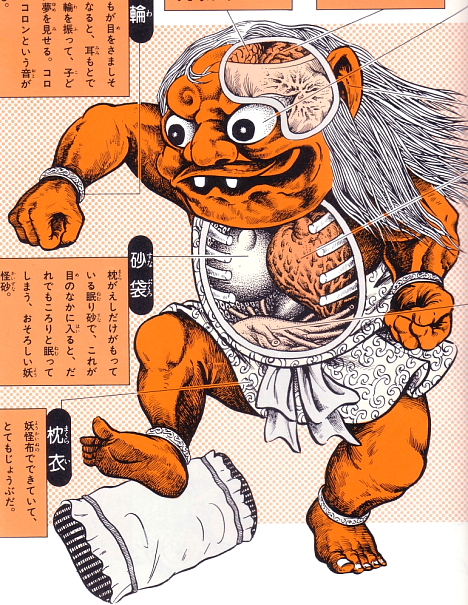
Another story says that a blind man that was murdered by an inn owner lingered on as a spirit in the room where the deed happened, and turned into a makura-kaeshi.
If he actually turns the entire sleeper around, so that his head is where his feet were, this would not only be very amusing to the Makura Gaeshi, but also very chilling to the sleeper when he finally wakes up.
In a book about Japanese ghosts, in a section regarding funeral customs, the Japanese (traditionally) only sleep facing south.
Consequently, when someone dies, they are laid down with their head facing north.
To wake up in a position normal only for a corpse would be unsettling indeed!
As a Western parallel, it would be like waking up in a coffin.
One story mentions a kappa that got a kick out of doing this.
Then he got caught, repented and even put it down in writing that he'll never pull a trick like that again.
And because he'd been so good, he turned into a zashiki-warashi, and apparently still tends to show up in a certain ryokan in Iwate province, in the town of Ninohe.
Another story is about a jizō statue that moves peoples' pillows--if you sleep next to it with your feet towards it, you'll wake up to find the pillow next to your feet, closer to the statue.
The pillow or makura:
Along with the pillows of court ladies from Heian, the wooden neck stands that they placed their heads on in order not to mess up their hair while sleeping were also called makura.
These wooden makura were often made with tiny little drawers, and the court ladies put their diaries in them, so nobody could read them while they were asleep.

And since they put all of their most secret thoughts into those diaries, it's not difficult to see how that would lead to a belief that a person's soul rests in a pillow/makura while they are asleep.
What is the truth?
It would be a very scary to tell your kids.
They would freak out if they ever see there pillow elsewhere!
It does happen you wake up on the other side of the bed, and is does happen you find your pillow elsewhere.
But is the Makura Gaeshi the reason?
Or something or someone else...
Tuesday, February 19, 2013
Simeon Bernardo's Tomb
 "...there was war in heaven. Michael and his angels fought against the
dragon, and the dragon and his angels fought back. But he was not strong
enough, and they lost their place in heaven."
"...there was war in heaven. Michael and his angels fought against the
dragon, and the dragon and his angels fought back. But he was not strong
enough, and they lost their place in heaven."The Book of Revelation 12:7-9 describes a war in heaven in which Michael (Jesus Christ) defeats Satan the Devil.
But in Malabon City there is a very special and disturbing tomb.
Simeon Bernardo's tomb has a statue of the Devil triumphant over St. Michael Archangel.
Through the years, this unusual tombstone has been featured on television and in some newspaper and magazine articles.
To this day, the tableau never fails to draw attention, especially on All Saints' Day when the living troop to the cemeteries to remember their dead loved ones.
There are people who claim that the Devil statue moves and terrorizes humans at night.
Some say that the figures used to be small and supernaturally grew each year to its current height. A few whisper about the devil roaming around the graveyard at night. And more stories pervade about the tomb below the sculpture, which up to this day remains blank and probably empty.
A marker on the left reveals an exchange between Lucifer and Michael; the devil proclaiming that he owns the world and Michael pleading to the people.
On the right is a crumbling bas relief of Adam and Eve, probably a symbol of the first sin of man.

Don Simeon Bernardo of Barangay Concepcion had it made.
In a GMA News feature in 2007, the grandson who was interviewed by Kara David said that it was his grandfather's express wish to have the statues placed on his tomb.
He also said that contrary to what some people think, Don Simeon was not a satanist; that he was in fact, a very prayerful person.
Apparently echoing Mang Floren's belief, a great grandson, Mr. Lubis Bernardo, said that the late Atty. Sumilang Bernardo, daughter of Don Simeon, once told them that the reason why her father had the statues made was that he believed evil was prevailing over good in the world.
Both Lubis and his Uncle Floren mentioned that a relative of theirs once said they could remove the statues if people changed for the better and good really prevailed in the world.
If indeed Don Simeon Bernardo's intention was to remind us, he has pretty much succeeded.
What is the truth?
The statue still exist, and you can visit it for yourself.
In the late 70s, according to Lubis, Atty. Sumilang asked him to replace the statues because they had been destroyed by addicts.
It so happened that the replacement statues were bigger than the original (by approximately five inches), and it seems there was even talk by some people who didn't know about the replacement, that the devil was getting bigger!
The statue could be possessed, but a scary statue in a place like a graveyard can play tricks with your mind.
We may live in his world, but Satan will never triumph!
Saturday, September 15, 2012
The Licked Hand
 A woman is home alone with only her dog for company.
Listening to the radio she hears of a serial killer on the loose in her town.
She gets scared and locks all the doors and windows in the house. But the basement window is jammed so she just locks the basement door. After locking the house she goes to bed, taking her dog to her room with her and letting it sleep under her bed.
With the dog close to her, she feels much saver.
She wakes in the night and can hear a dripping sound in her room.
The bedside lamp won't work and she is too scared to get out of bed to turn on the main light.
She hides under the covers but to reassure herself that the dog is still under the bed she puts her hand down and feels a lick on her hand.
She lays awake for some time listening to the dripping sound and periodically puts her hand down to where she can hear heavy breathing and each time gentle licks on her fingers.
Eventually she can no longer stand the dripping and enters the bathroom.
She finds her dog hanging on the shower head, with its stomach ripped open and the blood dripping in the shower.
She looks at the mirror and finds "PEOPLE CAN LICK TOO" written in blood on the wall.

Other versions
A version with an extra ending also has her parents dead in her closet.
She then attempts to call the police but is unable to. She then looks downstairs and sees the killer. This leads to a chase around the house while the killer attempts to kill her.
The police later come and find her dead and her body mangled.
In another version of the story, there is a man and his dog who go hiking.
Soon it is nighttime and the man goes to sleep. He wakes up and the dog is agitated. The dog licks his hand. Then the man falls asleep. The dog licks his hand again, but the man's eyes are closed. He feels something warm next to him and thinks it is the body warmers, then he falls asleep.
The dog keeps licking the man's hand. When the man wakes up his dog is gone and in the snow, it says: "People can lick too".

Another version has the main character an older, blind woman.
On the radio she hears that an escaped animal is on the loose. As before she goes into the house and locks all the doors. When the tap is dripping, she goes around the house, checking all the taps. As she tries each tap to find them not the source of the dripping sound. The woman feels licks on her hand, so she thinks her dog is telling her everything is all right.
Eventually she goes into the living room to find her dog nailed to the ceiling and blood dripping onto the floor.
The ending line is "so what was licking her hand?"
What is the truth?
A classic urban legend!
It is a typical campfire story too scare your friends with.
But is is possible?
I read this story was already going around in the year 1960 as some kind of chain mail.
And that is a year where a loth of urban legends were born.
What happened next? Did the girl died? Did the cops found who did it?
No one will ever now.
But if this would happen again in these modern time, it would be all over the TV and Internets.
Monday, September 10, 2012
The Balete Drive

The road is famous for the antique and century old Spanish houses and Balete Trees that lies all around the road.
The road is also notable for the haunting legends that it had.
According to some Balete Drive myths a tentacled, gargantuan Balete tree used to stand in the middle of the road.
Stories have it that in the 1970's a young woman was run over by a taxi along that street.
A few weeks later, taxi drivers and motorists start to report seeing a ghostly apparition of the young woman since then known as 'the white lady'.
'She' is reported to appear at the back seat of cars, scaring motorists and driving them to accidents that cost some their lives.
The white lady is also seen crossing the street particularly on rainy days.

They serve as portals between their realm and ours and thus stories like this abound whenever there's a Balete tree nearby.
What is the truth?
The belief in spirits is high in the Philippines.
Many of the Filipinos had experiences with some kind of ghost, spirit, demon.
There are many hotspots for ghost, and this is one of them.
If you want to look for yourself if it is true or not, you can go to the Balete Drive.
 Balete Drive connects the long span between E.Rodriguez and N. Domingo Avenues in New Manila, Quezon City. It’s about 45 minutes travel from Manila via the Cubao route through Espana and E. Rodriguez Avenue.
The Balete Drive corner at E. Rodriguez is a bustling business area mushroomed with fast foods and other establishments.
I hope to visit this place in the future on a big trip. But for now I can only rely on words.
However, some say the Balete Drive ghost tale was a brainchild of a news reporter who ran out of interesting stories to cover. Others say the Balete Drive ghost tales were testings for a school project on how fast and to what extent rumors would traveler.
Going on vacation to the Philippines? Why not visiting the Balete Drive? Fun for the hole family!
Sunday, July 29, 2012
Scary Korean Cartoon

Enjoy this very well made cartoon!
There is the Korean version and an English translated one.
But turn on your volume!
Scroll slowly down and enjoy this nice scary cartoon!
Monday, July 23, 2012
Tabi Po
But there is a lingering superstition that almost everybody follows: the uttering of 'Tabi Po' before peeing.
'Tabi Po' means 'Excuse me'.
This is due to the belief that 'engkantos (elemental spirits)' live in nooks, crannies and in small earth mounds called 'punso'.
If the person forgets to say 'Tabi Po' then his genitals would swell until the spirit is satiated/driven away by a shaman.
Some say that it did occur and some males have been reported to have had swollen genitals and were relieved only by shamans, who they call 'albularyo'.
Some instances can't be even explained by science!
What is the truth?
I also enjoy to take a pee in the nature!
In Belgium we have also some kind of an "Engkantos" who will punish you when you pee in the wild.
But we call them cops!
The beauty of this legend is; who would risk it to not say 'Tabi Po'?
Would you take the chance?
Thursday, June 28, 2012
Cannibal Girl
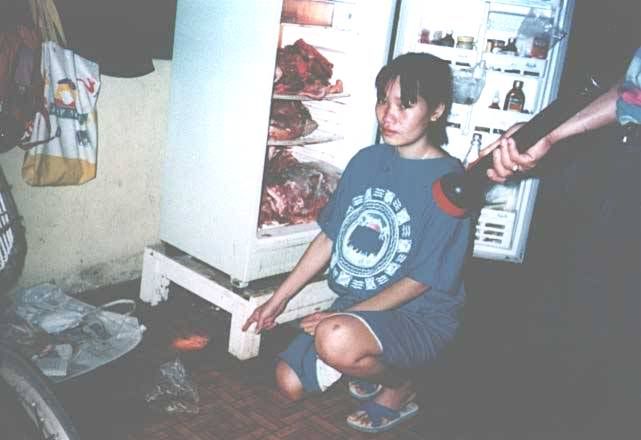 You are what you eat...
or
You are WHO you eat...
Some say you can tell a loth about a person by looking in his refrigerator.
So let`s see what is inside this woman her fridge.
Human meat...
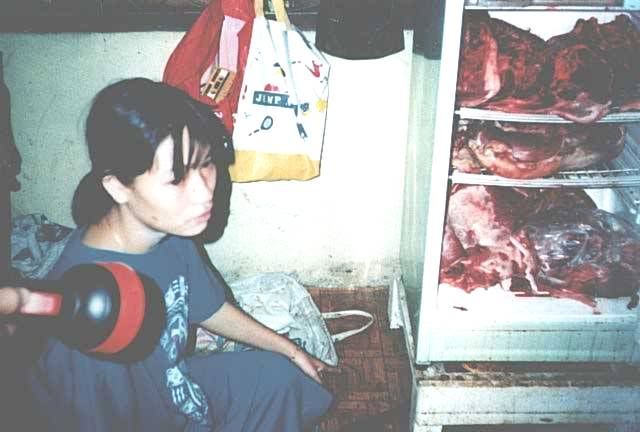 This woman was well known for her amazing cooking. She cooked for her husband and at party`s with relatives and friends.
People always asked her for her cooking secrets, but she never answerd.
She gave them human flesh to eat without their knowledge.
At the end the woman confessed that she killed her husband and ate his flesh.
The act of this woman had been compromised by the local police, now she is ready to accept punishment for the murders she committed.
What is the truth?
All the articles I found were very short. Some say the woman was from South Philippines but other say she is not.
I can`t find from what town, or what her name is.
How many she killed is unknown, some say she only ate men or children.
The only thing there is are the three photographs.
They look real.
And the woman has that guilty look on her face.
There are many cases of cannibalism all over the world, so this could be true.
Saturday, June 23, 2012
Tower Of Silence
The tower of silence.
Indian officials investigating several missing persons reports from a nearby city.
What they found was a “Tower of Silence,” or dakhma.
Zoroastrians use these sites to dispose of bodies in the open air!
While sites like these are not uncommon in certain parts of India, several peculiarities hint at something more unusual…

None of the bodies depicted in the photograph were identified. Villagers from nearby, though initially surprised at the sheer number of corpses in the dakhma, proved unable to recognize the bodies. The corpses also do not match the descriptions of the missing people.
There were no animals around except for maggots and flies. Zoroastrians rely on birds (i.e. buzzards) to dispose of the bodies, in the belief they are contributing back to the Earth. Officials found the corpses relatively untouched by any sort of animal.
There is no official count of the bodies. In fact, little work was actually accomplished at the site and, perhaps, this is why only one photograph has emerged. Officials avoided the spot – not only because they felt uneasy looking at it, but for the following, as well:
The deep pit in the center of the photograph was filled with several feet of festering blood – far more than the bodies on the outside could ever supply. The stench was so unbearable that many of the officials began to get nauseous when they first approached the dakhma.
The expedition was ended when a villager accidentally kicked a small bone into the pit, penetrating the coagulated surface of the pool. A massive burst of gas from the decomposing blood erupted from the pit, splashing those looking into it, along with the photographer.
Those caught in the explosion were immediately sent to the hospital, where they were quarantined for possible infection. They became delirious with fever, shouting about “being tainted with the blood of Ahriman” (the personification of evil in Zoroastrianism), despite never having admitted having any familiarity with the religion.
In fact, many of them had no idea what the dakhma was when they had found it. Delirium turned to insanity as many began to attack hospital staff until they were sedated. The fever eventually killed all of them.
When officials returned with HAZMAT gear the following day, the site was empty. All the bodies had been removed and, astonishingly, the pool of blood in the pit had been drained. All that remained of the incident was this photograph.
The Dakhma is belief to be a circular raised structure used by Zoroastrians for exposure of the dead.
The common Dakhma originally denoted any place of the dead.
The term "Tower of Silence" is a neologism attributed to Robert Murphy, who, in 1832, was a translator of the British colonial government in India.

Zoroastrian tradition considers a dead body, in addition to cut hair and nail-parings, to be unclean. Specifically, the corpse demon was believed to rush into the body and contaminate everything it came into contact with, hence the Vendidad (an ecclesiastical code "given against the demons") has rules for disposing of the dead as "safely" as possible.
To preclude the pollution of earth or fire, the bodies of the dead are placed atop a tower and so exposed to the sun and to birds of prey. Thus, "putrefaction with all its concomitant evils... is most effectually prevented."
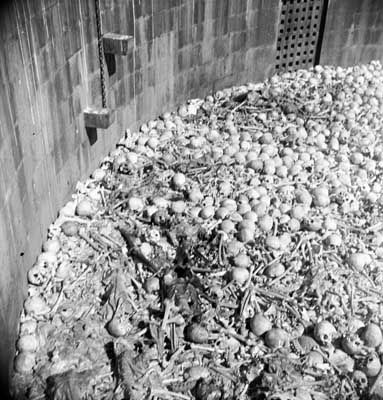 The towers, which are fairly uniform in their construction, have an almost flat roof, with the perimeter being slightly higher than the center.
The roof is divided into three concentric rings:
The bodies of men are arranged around the outer ring, women in the second circle, and children in the innermost ring. Once the bones have been bleached by the sun and wind, which can take as long as a year, they are collected in an ossuary pit at the center of the tower, where they gradually disintegrate and the remaining material, with run-off rainwater, runs through multiple coal and sand filters before being eventually washed out to sea.
The ritual precinct may be entered only by a special class of pallbearers, called nasellars, a contraction of nasa.salar, caretaker of potential pollutants.
The earliest reference to ritual exposure comes from Herodotus, where the historiographer describes the rites to have been secret, and "vaguely" that these first occurred after the body had been dragged around by a dog or bird. Further, the Magi (a term that eventually came to signify a Zoroastrian priest but may not have meant that in Herodotus' time) practiced this quite openly, before they finally embalmed the corpse with wax and laid it in a trench.
 While the discovery of ossuaries (in both eastern and western Iran) dating to 5th and 4th centuries BCE indicates that bones were isolated, that this separation occurred through ritual exposure cannot be assumed: burial mounds, where the bodies were wrapped in wax, have also been discovered. The tombs of the Achaemenid emperors at Naqsh-e Rustam and Pasargadae likewise suggest non-exposure, at least until the bones could be collected. According to legend (incorporated by Ferdowsi into his Shahnameh), Zoroaster is himself interred in a tomb at Balkh (in present-day Afghanistan).
While general exposure of the dead is attested from earliest accounts, the ritual customs surrounding that practice appear to first date to the Sassanid era (3rd -7th century CE). They are known in detail from the supplement to the Sayest ne Sayest, the two Rivayat collections, and the two Saddars. The use of towers is first attested in the 16th century.
What is the truth?
I am not so familiar with the Indian/ Iranian culture and beliefs.
But this is the first time I saw something like this.
But what about the story? Did it really happened?
The entire story is based on that first picture.
And with a little investigation, it was easy to see the pit was photoshopt!
And later on, I found the original picture.
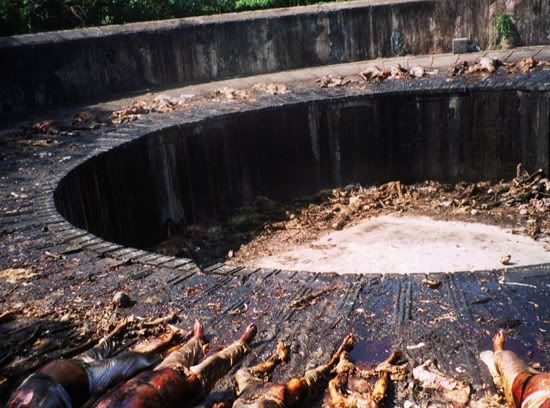
The picture was the hard evidence of this story.
But the picture is fake, just like the story.
Indian officials investigating several missing persons reports from a nearby city.
What they found was a “Tower of Silence,” or dakhma.
Zoroastrians use these sites to dispose of bodies in the open air!
While sites like these are not uncommon in certain parts of India, several peculiarities hint at something more unusual…
None of the bodies depicted in the photograph were identified. Villagers from nearby, though initially surprised at the sheer number of corpses in the dakhma, proved unable to recognize the bodies. The corpses also do not match the descriptions of the missing people.
There were no animals around except for maggots and flies. Zoroastrians rely on birds (i.e. buzzards) to dispose of the bodies, in the belief they are contributing back to the Earth. Officials found the corpses relatively untouched by any sort of animal.
There is no official count of the bodies. In fact, little work was actually accomplished at the site and, perhaps, this is why only one photograph has emerged. Officials avoided the spot – not only because they felt uneasy looking at it, but for the following, as well:
The deep pit in the center of the photograph was filled with several feet of festering blood – far more than the bodies on the outside could ever supply. The stench was so unbearable that many of the officials began to get nauseous when they first approached the dakhma.
The expedition was ended when a villager accidentally kicked a small bone into the pit, penetrating the coagulated surface of the pool. A massive burst of gas from the decomposing blood erupted from the pit, splashing those looking into it, along with the photographer.
Those caught in the explosion were immediately sent to the hospital, where they were quarantined for possible infection. They became delirious with fever, shouting about “being tainted with the blood of Ahriman” (the personification of evil in Zoroastrianism), despite never having admitted having any familiarity with the religion.
In fact, many of them had no idea what the dakhma was when they had found it. Delirium turned to insanity as many began to attack hospital staff until they were sedated. The fever eventually killed all of them.
When officials returned with HAZMAT gear the following day, the site was empty. All the bodies had been removed and, astonishingly, the pool of blood in the pit had been drained. All that remained of the incident was this photograph.
What is a 'Tower of Silence', Dakhma?
These places are real!The Dakhma is belief to be a circular raised structure used by Zoroastrians for exposure of the dead.
The common Dakhma originally denoted any place of the dead.
The term "Tower of Silence" is a neologism attributed to Robert Murphy, who, in 1832, was a translator of the British colonial government in India.
Zoroastrian tradition considers a dead body, in addition to cut hair and nail-parings, to be unclean. Specifically, the corpse demon was believed to rush into the body and contaminate everything it came into contact with, hence the Vendidad (an ecclesiastical code "given against the demons") has rules for disposing of the dead as "safely" as possible.
To preclude the pollution of earth or fire, the bodies of the dead are placed atop a tower and so exposed to the sun and to birds of prey. Thus, "putrefaction with all its concomitant evils... is most effectually prevented."
The towers, which are fairly uniform in their construction, have an almost flat roof, with the perimeter being slightly higher than the center. The roof is divided into three concentric rings:
The bodies of men are arranged around the outer ring, women in the second circle, and children in the innermost ring. Once the bones have been bleached by the sun and wind, which can take as long as a year, they are collected in an ossuary pit at the center of the tower, where they gradually disintegrate and the remaining material, with run-off rainwater, runs through multiple coal and sand filters before being eventually washed out to sea.
The ritual precinct may be entered only by a special class of pallbearers, called nasellars, a contraction of nasa.salar, caretaker of potential pollutants.
The earliest reference to ritual exposure comes from Herodotus, where the historiographer describes the rites to have been secret, and "vaguely" that these first occurred after the body had been dragged around by a dog or bird. Further, the Magi (a term that eventually came to signify a Zoroastrian priest but may not have meant that in Herodotus' time) practiced this quite openly, before they finally embalmed the corpse with wax and laid it in a trench.
While the discovery of ossuaries (in both eastern and western Iran) dating to 5th and 4th centuries BCE indicates that bones were isolated, that this separation occurred through ritual exposure cannot be assumed: burial mounds, where the bodies were wrapped in wax, have also been discovered. The tombs of the Achaemenid emperors at Naqsh-e Rustam and Pasargadae likewise suggest non-exposure, at least until the bones could be collected. According to legend (incorporated by Ferdowsi into his Shahnameh), Zoroaster is himself interred in a tomb at Balkh (in present-day Afghanistan).While general exposure of the dead is attested from earliest accounts, the ritual customs surrounding that practice appear to first date to the Sassanid era (3rd -7th century CE). They are known in detail from the supplement to the Sayest ne Sayest, the two Rivayat collections, and the two Saddars. The use of towers is first attested in the 16th century.
What is the truth?
I am not so familiar with the Indian/ Iranian culture and beliefs.
But this is the first time I saw something like this.
It must be horrible to discover a place like this, but if this is what the Zoroastrians beliefs, so be it.
I do not know if they still perform this way of funeral. But they did it some years ago.
I wonder if it is legal? Such a place must be a health hazard!
I do not know if they still perform this way of funeral. But they did it some years ago.
I wonder if it is legal? Such a place must be a health hazard!
But what about the story? Did it really happened?
The entire story is based on that first picture.
And with a little investigation, it was easy to see the pit was photoshopt!
And later on, I found the original picture.
The picture was the hard evidence of this story.
But the picture is fake, just like the story.
Still the picture is amazing!
The real deal about the Tower of Silence is really disturbing.
Subscribe to:
Posts (Atom)