Showing posts with label Bible. Show all posts

Monday, December 12, 2016

Satan the Devil


Some modern scholars say that Satan is not a real person.
They claim that he was merely created in the imagination of men!

Is Satan a real person? If so, where did he come from? 
Is he the unseen power behind the problems plaguing our world?
As there is a lot to tell about this creature, this article will give answers to these questions.


The origins

The Bible describes Satan as a real person who exists in the invisible spirit realm. 
It tells us about his vicious and ruthless qualities as well as his evil actions. 
It even records conversations that Satan had with God and with Jesus.

Where did such an evil being come from? 
Long before man existed, God created his “firstborn” Son, who eventually came to be known as Jesus. 
In time, other “sons of God,” called angels, were created. All were perfect and righteous. 
However, one of those angels would become Satan.

Satan was not his given name at the time of his creation. 
It is a descriptive name, which means “Adversary; Enemy; Accuser.” 
He came to be called Satan because he chose a life course in opposition to God.

Feelings of pride and rivalry toward God grew within this spirit creature. 
He wanted others to worship him. 
When God’s firstborn Son, Jesus, was on the earth, Satan even attempted to get Jesus to “do an act of worship” to him.


Satan implied that God was a liar, when, in fact, he was the liar.

He told Eve that she could be like God, whereas he wanted to be like God. 
And through his deceitful ways, he achieved his selfish desire.

To Eve, he made himself higher than God. 
By obeying Satan, Eve accepted Satan as her god.


By fomenting rebellion, this once trusted angel made himself Satan—an adversary and enemy of God and man. 
The designation “Devil,” which means “Slanderer,” was also added to this wicked one’s description. 
This leader of sin eventually influenced other angels to disobey God and join his rebellion. 
Now known as Demons (Will be discussed in future article) .


Hiding the truth

A criminal may wipe his fingerprints from the crime scene in an attempt to leave no trace of his identity. However, when the police arrive, they realize that if a crime has been committed, there must be a criminal. 

Satan, the original “manslayer,” tries to leave no trace of his identity. 
When speaking with Eve, Satan hid his identity behind a serpent (Snake). He is still trying to hide today.

He “has blinded the minds of the unbelievers” so as to conceal the extent of his powerful influence.

However, Jesus identified Satan as the criminal mastermind behind the corrupt world we live in. 
He called him “the ruler of this world.
” (John 12:31; 16:11) “The whole world is lying in the power of the wicked one,” wrote the apostle John. 
(1 John 5:19) Satan effectively uses “the desire of the flesh and the desire of the eyes and the showy display of one’s means of life” in “misleading the entire inhabited earth.”  
He is the one whom mankind in general obeys.

As was the case with Eve, those obeying Satan, in effect, make him their god. Hence, Satan is “the god of this system of things.” (2 Corinthians 4:4) 
The effects of his rule include hypocrisy and lies; war, torture and destruction; crime, greed and corruption.


What is the truth?

“The Devil’s deepest wile,” wrote 19th-century poet Charles-Pierre Baudelaire, “is to persuade us that he does not exist.”

If you belief in God and the Bible, then there is no excuse not to belief in him.
It is vital that you accept the reality of Satan’s existence and accept the protection God is giving you.
If you do accept God, He will protect you, and Satan will be no match.

If you still do not belief that Satan the Devil is a real... Then he is succeeding.


Wednesday, December 7, 2016

Is Christmas a Christian holiday?

Is Christmas a Christian holiday?

At this periode, this question is very important!

The Horrror Tree present to you the FACTS of Christmas;

1) Celebrating Jesus’ birthday: “The early Christians did not celebrate [Jesus’] birth because they considered the celebration of anyone’s birth to be a pagan custom.”—The World Book Encyclopedia.

2) December 25: There is no proof that Jesus was born on that date. Church leaders likely chose this date to coincide with pagan festivals held on or around the winter solstice.

3) Gift-giving, feasting, partying: The Encyclopedia Americanasays: “Saturnalia, a Roman feast celebrated in mid-December, provided the model for many of the merry-making customs of Christmas. From this celebration, for example, were derived the elaborate feasting, the giving of gifts, and the burning of candles.” The Encyclopædia Britannica notes that “all work and business were suspended” during Saturnalia.

4) Christmas lights: According to The Encyclopedia of Religion, Europeans decorated their homes “with lights and evergreens of all kinds” to celebrate the winter solstice and to combat evil spirits.

5) Mistletoe, holly: “The Druids ascribed magical properties to the mistletoe in particular. The evergreen holly was worshiped as a promise of the sun’s return.”—The Encyclopedia Americana.

6) Christmas tree: “Tree worship, common among the pagan Europeans, survived after their conversion to Christianity.” One of the ways in which tree worship survived is in the custom of “placing a Yule tree at an entrance or inside the house in the midwinter holidays.”—Encyclopædia Britannica.

7) The star.... That is for a future article on THT! (You will be amazed of what the star stand for!)

If you are a Christian or an atheist , you need to think abouth these facts.

Keep looking for the truth!


Tuesday, February 19, 2013

Simeon Bernardo's Tomb


"...there was war in heaven. Michael and his angels fought against the dragon, and the dragon and his angels fought back. But he was not strong enough, and they lost their place in heaven."

The Book of Revelation 12:7-9 describes a war in heaven in which Michael (Jesus Christ) defeats Satan the Devil.

But in Malabon City there is a very special and disturbing tomb.

Simeon Bernardo's tomb has a statue of the Devil triumphant over St. Michael Archangel.

Through the years, this unusual tombstone has been featured on television and in some newspaper and magazine articles.

To this day, the tableau never fails to draw attention, especially on All Saints' Day when the living troop to the cemeteries to remember their dead loved ones.
There are people who claim that the Devil statue moves and terrorizes humans at night.

Some say that the figures used to be small and supernaturally grew each year to its current height. A few whisper about the devil roaming around the graveyard at night. And more stories pervade about the tomb below the sculpture, which up to this day remains blank and probably empty.

A marker on the left reveals an exchange between Lucifer and Michael; the devil proclaiming that he owns the world and Michael pleading to the people.
On the right is a crumbling bas relief of Adam and Eve, probably a symbol of the first sin of man.


Don Simeon Bernardo of Barangay Concepcion had it made.
In a GMA News feature in 2007, the grandson who was interviewed by Kara David said that it was his grandfather's express wish to have the statues placed on his tomb.
He also said that contrary to what some people think, Don Simeon was not a satanist; that he was in fact, a very prayerful person.

Apparently echoing Mang Floren's belief, a great grandson, Mr. Lubis Bernardo, said that the late Atty. Sumilang Bernardo, daughter of Don Simeon, once told them that the reason why her father had the statues made was that he believed evil was prevailing over good in the world.

Both Lubis and his Uncle Floren mentioned that a relative of theirs once said they could remove the statues if people changed for the better and good really prevailed in the world.

If indeed Don Simeon Bernardo's intention was to remind us, he has pretty much succeeded.


What is the truth?

The statue still exist, and you can visit it for yourself.

In the late 70s, according to Lubis, Atty. Sumilang asked him to replace the statues because they had been destroyed by addicts.
It so happened that the replacement statues were bigger than the original (by approximately five inches), and it seems there was even talk by some people who didn't know about the replacement, that the devil was getting bigger!

The statue could be possessed, but a scary statue in a place like a graveyard can play tricks with your mind.

We may live in his world, but Satan will never triumph!


Tuesday, December 25, 2012

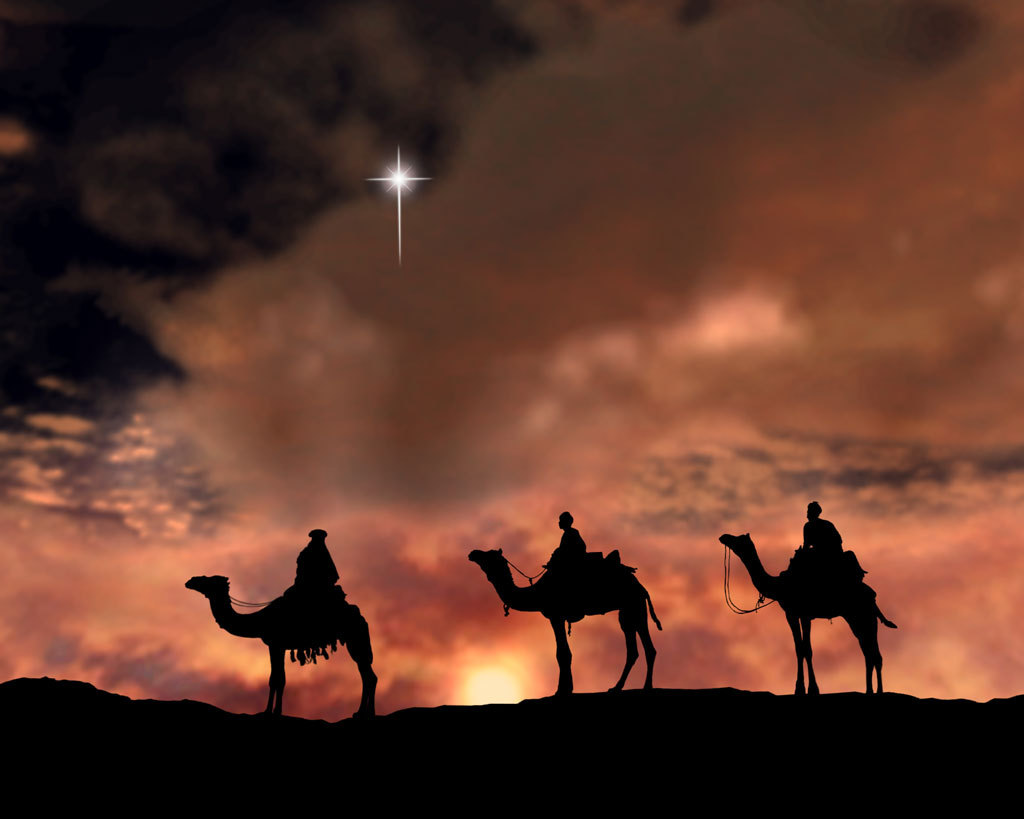
The Wise Men From The East And The Star


To ruin your happy holiday!

The Horror Tree will tell you the truth about the `wise men` from the east and the star.

The peculiar nature of the star caught the eye of “wise men” from the East, eventually leading them to young Jesus.

Popular Christmas stories portray the star as a good sign from heaven.

One reference work refers to the star as part of a “divine pre-arrangement whereby . . . the child Jesus was honored and acknowledged by the Father as his beloved Son.”

Even Christmas carols honor that star!


What was this star?

Some have suggested that it was a natural celestial phenomenon.
A number of scholars have proposed that it was a conjunction of planets.

However, as The New Bible Dictionary points out, “such a phenomenon could not naturally be referred to as ‘a star.’”
Multiple planets passing close to each other would still appear as individual points of light and not as a single star.
 Some have suggested other celestial phenomena, such as a comet or a supernova.

However, none of these phenomena could maneuver through the sky in a way that would lead the men to a specific city and then stop over a specific house.


Could the star have been a natural event or could it have appeared by divine providence?

Consider some facts: The “wise men” were not what we would today call academics; neither were they kings.
They were, as most modern English translations read, “astrologers.”
They engaged in a practice condemned in the Bible.
Note that only these astrologers were reported to have “seen” the star.
If the star had been an actual star, it would have been as visible as a beacon to the public in general.

But even King Herod had to ask them about the details of its appearance.
This star guided the astrologers first to Jerusalem, to Herod, a mortal enemy of the future Messiah.
He intended to kill the child Jesus.
Then the star shifted direction and led the astrologers south to Bethlehem where Jesus was, thus placing Jesus’ life in danger.

These facts give evidence that the star was from an evil source, most likely Satan the Devil.
The Bible describes him as using “lying signs and portents.”
 It should thus not surprise true Christians that Satan could make only astrologers see a starlike object and could jockey that “star” to lead them to God’s Son, whom he wanted to destroy.


It is noteworthy, however, that God did in fact announce Jesus’ birth through miraculous means.

 On the very night of Jesus’ birth, an angel appeared to a group of shepherds and announced the birth of a “Savior.”
The angel also provided directions so that the shepherds could visit Jesus.
Then a multitude of angels appeared and proceeded to praise God.

God used these angels and not the star to inform people of Jesus’ birth.


Happy crisis and a happy new fear!

Sunday, December 16, 2012

End Of The World


How do you feel about December 21, 2012, the date on the Maya calendar that many have been saying would bring worldwide change?

Depending on what you expected, you might be relieved, disappointed, or indifferent.
Was it just another incorrect prediction for the end of the world?

What about “the end of the world” described in the Bible?

Some fear that the earth will be burned up.
Others are fascinated by end-time scenarios.

Many have simply grown tired of being told that the end is near.
But could those be reactions to fiction rather than to fact?

You might be surprised to learn what the Bible really says about the end of the world.
We invite you to consider the Bible’s answers to some common questions about the end of the world.


Will the earth be burned up?

THE BIBLE’S ANSWER: “[God] has founded the earth upon its established places; it will not be made to totter to time indefinite, or forever.”—PSALM 104:5.

The earth will not be destroyed, either by fire or by any other means. Instead, the Bible teaches that this planet is mankind’s eternal home. Psalm 37:29 says: “The righteous themselves will possess the earth, and they will reside forever upon it.”—Psalm 115:16; Isaiah 45:18.


After God created the earth, he said that it “was very good,” and he still feels that way. (Genesis 1:31) Far from planning to destroy it, he promises to “bring to ruin those ruining the earth”—and to protect it from permanent damage.—Revelation 11:18.


You may wonder, though, about 2 Peter 3:7. That Bible verse says: “The heavens and the earth that are now are stored up for fire.” Does this not show that the earth will be burned up? Actually, the Bible sometimes uses the terms “heavens,” “earth,” and “fire” figuratively, as symbols. For example, when Genesis 11:1 says: “All the earth continued to be of one language,” it uses “earth” to mean human society.


The context of 2 Peter 3:7 shows that the heavens, earth, and fire mentioned there are also symbols. Verses 5 and 6 draw a parallel with the Flood of Noah’s day.
On that occasion, an ancient world was destroyed, yet our planet did not disappear. Instead, the Flood wiped out a violent society, or “earth.” It also destroyed a kind of “heavens”—the people who ruled over that earthly society. (Genesis 6:11) In the same way, 2 Peter 3:7 foretells the permanent destruction of wicked society and its corrupt governments as if by fire.


What happens at the end of the world?

THE BIBLE’S ANSWER: “The world is passing away and so is its desire, but he that does the will of God remains forever.”—1 JOHN 2:17.

“The world” that is to pass away is, not the earth, but the world of mankind whose lives are not in harmony with God’s will. Just as a surgeon might remove a cancerous tumor to save a patient’s life, God will “cut off” the wicked so that good people can truly enjoy life on earth. (Psalm 37:9) In that sense, “the end of the world” is a good thing.


Such a positive view of “the end of the world” is implied by the Bible translations that render this expression “the conclusion of the system of things” or “the end of the age.” (Matthew 24:3; New International Version) Since both humankind and the earth survive the end, does it not seem reasonable that a new age, a new system of things, would follow? The Bible answers yes, for it speaks of “the coming system of things.”—Luke 18:30.

Jesus called that future period “the renewal of all things.” At that time, he will restore humanity to the conditions that God originally intended. (Matthew 19:28, NIV) We will then enjoy

▪ A paradise earth with security and prosperity for all.—Isaiah 35:1; Micah 4:4.
▪ Work that is meaningful and satisfying.—Isaiah 65:21-23.
▪ The curing of all disease.—Isaiah 33:24.
▪ The reversal of aging.—Job 33:25.
▪ The resurrection of the dead.—John 5:28, 29.


Is the end of the world really near?


THE BIBLE’S ANSWER: “When you see these things occurring, know that the kingdom of God is near.”—LUKE 21:31.

In the book The Last Days Are Here Again, Professor Richard Kyle writes that “sudden change and social chaos create an atmosphere conducive to predictions of the end of the world.” That is especially the case when the change and chaos seem hard to explain.


However, the Bible prophets who spoke about the end were not trying to explain baffling events of their day. Instead, they were inspired by God to describe conditions that would indicate an imminent end of the world. Consider some of those prophecies and decide for yourself whether they are being fulfilled in our time.


▪ Wars, famines, earthquakes, and epidemics of deadly disease.—Matthew 24:7; Luke 21:11.
▪ Significant increase in crime.—Matthew 24:12.
▪ The ruining of the earth by mankind.—Revelation 11:18.
▪ People who love themselves, money, and pleasures but do not love God.—2 Timothy 3:2, 4.
▪ The breakdown of the family.—2 Timothy 3:2, 3.
▪ General apathy toward the evidence of the approaching end.—Matthew 24:37-39.
▪ The preaching of the good news of God’s Kingdom worldwide.—Matthew 24:14.

As Jesus said, seeing “all these things” lets us know that the end of the world is near. (Matthew 24:33)


Do mistaken expectations about the end mean that it will never come?

THE BIBLE’S ANSWER: “Whenever it is that they are saying: ‘Peace and security!’ then sudden destruction is to be instantly upon them just as the pang of distress upon a pregnant woman; and they will by no means escape.”—1 THESSALONIANS 5:3.

The Bible likens the world’s destruction to the onset of labor—the mother’s pain is inevitable and comes suddenly. The time leading up to the end is also like a pregnancy, for an expectant mother is aware of ever-increasing signs of the coming birth. Her doctor might estimate the birth date; yet, even if the event should delay, she would still be sure that her baby will soon be born. Similarly, any mistaken expectations about the end do not alter the unmistakable features identifying these as “the last days.”—2 Timothy 3:1.

‘If the sign that we are near the end is so obvious,’ you might ask, ‘why do so many people fail to recognize it?’
The Bible shows that when the end is near, many will belittle the evidence.

Rather than acknowledge the fundamental changes during the last days, they would scoff: “From the day our forefathers fell asleep in death, all things are continuing exactly as from creation’s beginning.” (2 Peter 3:3, 4) In other words, the sign of the last days is clear, but many will ignore it.—Matthew 24:38, 39.


This article has considered just some of the Scriptural evidence that the end is near.

Even if you do not belief in the Bible, you can not ignore what is happening!

But do not worry, the world will not end on December 21.

Tuesday, October 30, 2012

Halloween


Witches and ghosts, pumpkins and bonfires, trick or treat.
The outward trappings of Halloween are easy to identify.

The Horror Tree is ready to ruin your holiday, with the truth!

Halloween has also been called All Hallows’ Eve, the eve of All Saints’ Day.
This supposedly Christian name, however, hides origins that are far from hallowed.

In fact, scholars say that Halloween’s roots go back to a time long before Christianity, the era when the ancient Celts inhabited Britain and Ireland. Using a lunar calendar, the Celts divided the year into two seasons—the dark winter months and the light summer months.
On the full moon nearest November 1, the Celts celebrated the festival of Samhain, meaning “Summer’s End.”


The festival of Samhain

It was believed that on the festival of Samhain, the veil between the human and the supernatural worlds was parted and spirits, both good and evil, roamed the earth.
The souls of the dead were thought to return to their homes, and families would put out food and drink for their ghostly visitors in hopes of appeasing them and warding off misfortune.


Thus, today when children dressed as ghosts or witches go from house to house demanding a Halloween treat or threatening a mischievous trick, they unwittingly perpetuate the ancient rituals of Samhain. Jean Markale comments in his book Halloween, histoire et traditions (Halloween—History and Traditions): “In receiving something in their hands, they establish, on a symbolic level that they do not understand, a brotherly exchange between the visible and the invisible worlds. That is why the Halloween masquerades . . . are in fact sacred ceremonies.”

Since people believed that the barriers between the physical and supernatural realms were down, they thought that humans were able to cross over into the spirit world with ease. Samhain was therefore a particularly auspicious time to unlock the secrets of the future.

Apples or hazelnuts, both viewed as products of sacred trees, were used to divine information concerning marriage, sickness, and death. For example, apples with identifying marks were placed in a tub of water. By seizing an apple using only the mouth, a young man or woman was supposed to be able to identify his or her future spouse. This divination practice survives today in the Halloween game of bobbing for apples.


Samhain was also characterized by drunken revelry and a casting aside of inhibitions. “Traditional values, if not flouted, were reversed,” states Markale. “What was forbidden was allowed, and what was allowed was forbidden.” Halloween still reflects this spirit today, which no doubt accounts to a great extent for its increasing popularity. Commenting on this, The Encyclopedia of Religion describes Halloween nowadays as “a time when adults can also cross cultural boundaries and shed their identities by indulging in an uninhibited evening of frivolity. Thus, the basic Celtic quality of the festival as an evening of annual escape from normal realities and expectations has remained into the twentieth century.”


A "Christian" mask

Following the potato famine in the 19th century, Irish immigrants took Halloween and its customs to the United States. From there it has returned to Europe in the past few years.
The growing popularity of Halloween, though, is not viewed favorably by all.
As notes the newspaper Le Monde, “Halloween, which coincides with All Saints’ Day and All Souls’ Day (November 1 and 2) and could even replace them, is making shopkeepers happy and panicking churchmen.”

Church representatives in France have expressed concern over the decline of these traditional Catholic holidays in favor of Halloween, seeing it as a sign of the “paganization of society.”
For Stanislas Lalanne, spokesman for France’s Conference of Catholic Bishops, Halloween ‘distorts the meaning of life and death.’
The bishop of Nice, Jean Bonfils, stated that “this festival and its rituals have nothing to do with our Mediterranean and Christian culture,” and he warned Catholics against “the most important festival of Satanists the world over.”

Carlo Maria Martini, cardinal of Milan, Italy, urged Italians not to abandon Catholic holidays, declaring that Halloween is “alien to our tradition, which has immense value and must be continued. All Souls’ Day is a celebration that belongs to our history. It is the moment in which hope for eternal life unfolds, a moment in which the Lord makes us understand that there is more to life than that on earth.”

Many sincere Catholics no doubt feel the same way.
Yet, is the distinction between Halloween and All Souls’ Day as clear-cut as these comments would lead us to believe?
What does a close examination of the roots of these Catholic holidays reveal?


The Catholic Encyclopedia defines All Saints’ Day as a feast to “honour all the saints, known and unknown.” At the end of the second century, so-called Christians began to honor those who had been martyred for their faith and, believing that they were already with Christ in heaven, prayed to them to intercede on their behalf.


A regular commemoration began when on May 13, 609 or 610 C.E., Pope Boniface IV dedicated the Pantheon—the Roman temple of all the gods—to Mary and all the martyrs. Markale comments: “The Roman gods left their place to the saints of the triumphant religion.”

The change of date to November came under Pope Gregory III (731-741 C.E.), who dedicated a chapel in Rome to all the saints and ordered that they be honored on November 1.
Exactly why he did this is unknown.
But it may have been because such a holiday was already being celebrated on this date in England.
The Encyclopedia of Religion points out: “Samhain remained a popular festival among the Celtic people throughout the christianization of Great Britain.
The British church attempted to divert this interest in pagan customs by adding a Christian celebration to the calendar on the same date as Samhain. . . .
The medieval British commemoration of All Saints’ Day may have prompted the universal celebration of this feast throughout the Christian church.”

Markale points out the increasing influence of Irish monks throughout Europe at this time.
The New Catholic Encyclopedia also observes: “The Irish often assigned the first of the month to important feasts, and since November 1 was also the beginning of the Celtic winter, it would have been a likely date for a feast of all the saints.” Finally, in 835 C.E., Pope Gregory IV made this festival universal.

As for All Souls’ Day, on which prayers are recited in order to help souls in purgatory attain heavenly bliss, this holiday was fixed on November 2 during the 11th century by the monks of Cluny, France.
While All Souls’ Day is ostensibly a Catholic holiday, it is clear that confusion existed in the minds of ordinary folk.
The New Catholic Encyclopedia notes that “throughout the Middle Ages it was popular belief that the souls in purgatory could appear on this day as will-o’-the-wisps, witches, toads, etc.”

Unable to uproot pagan beliefs from the hearts of its flock, the church simply hid them behind a “Christian” mask.
Highlighting this fact, The Encyclopedia of Religion says: “The Christian festival, the Feast of All Saints, commemorates the known and unknown saints of the Christian religion just as Samhain had acknowledged and paid tribute to the Celtic deities.”


What is the truth?

Just how concerned should you be about the dark past of Halloween and similar celebrations?
After all, in most people’s minds, Halloween is little more than a time to dress up and have fun.
But would you not agree that it is important for parents to make sure that whatever recreation their children pursue is wholesome and not harmful?

A school inspector from France with more than 20 years of experience in teaching was asked about the influence of Halloween on young children.
He commented: “I am worried that going from house to house threatening adults in order to obtain sweets can have long-term negative consequences on children. It can foster a selfish and egocentric personality. They learn that by exerting pressure, by demanding with threats, by making others afraid, they can obtain what they want.” Parents must therefore ask themselves, ‘What “lessons” will my children learn from celebrating this holiday?’


Not surprisingly, many families find that giving in to childish demands for treats and costumes can be an expensive undertaking.
“Halloween . . . is not a holiday,” observes Robert Rochefort, general director of France’s Research Center for the Study and Observation of Living Conditions, “it is event marketing.” Halloween fills a shopping lull prior to Christmas. In other words, it is just one more thing pressuring people to spend money.

I have noticed it is a very popular holiday even for Christians!
The Bible thus condemns the whole idea of putting a Christian mask on a pagan practice!

While it is true that the vast majority of those who celebrate Halloween would claim to spurn Satanic practices, we should, nevertheless, be aware that historically this holiday has close connections with the occult.

I only showed you one aspect of the lies of halloween, the lies and mask of the catholics. But there are so many more things you should know.
So see you next year for more!


Thursday, July 19, 2012

The Cross


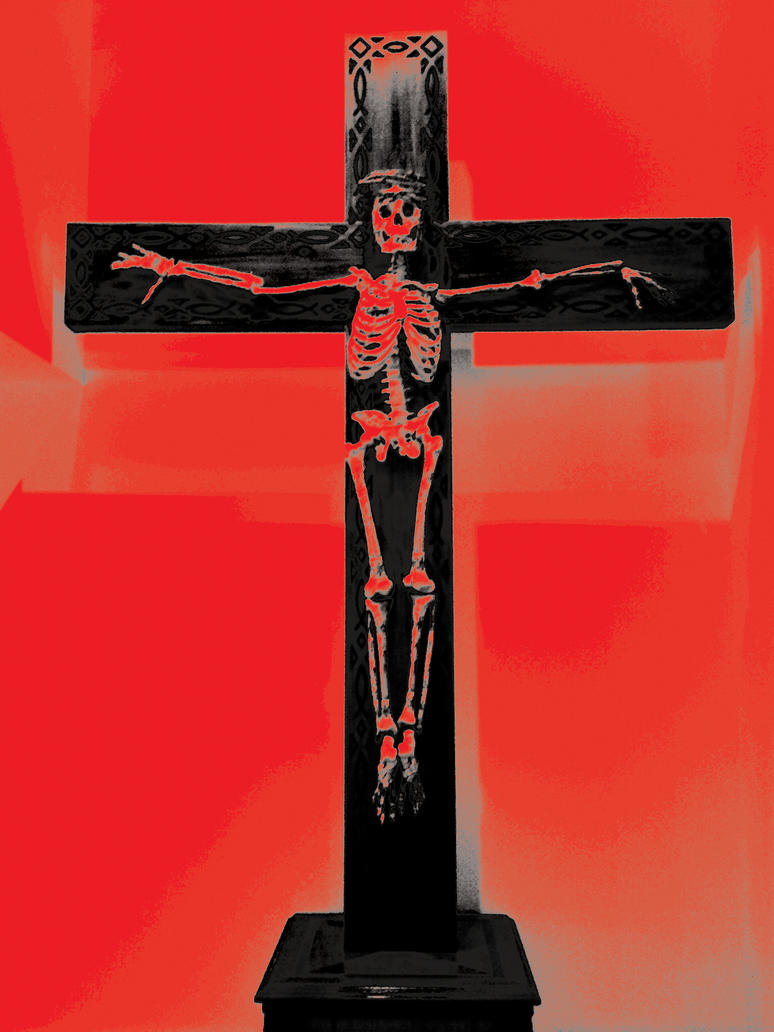
The cross is one of the most recognizable religious symbols known to man.

Millions revere it, considering it to be the sacred instrument on which Jesus was put to death.

Roman Catholic writer and archaeologist Adolphe-Napoleon Didron stated: “The cross has received a worship similar, if not equal, to that of Christ; this sacred wood is adored almost equally with God Himself.”

Some say that the cross makes them feel closer to God when they pray.
Others use it as an amulet, thinking that it protects them from evil.
But should Christians use the cross as an object of veneration?
Did Jesus really die on a cross? What does the Bible teach on this subject?
What Does the Cross Symbolize?

Long before the Christian era, crosses were used by the ancient Babylonians as symbols in their worship of the fertility god Tammuz.
The use of the cross spread into Egypt, India, Syria, and China.
Then, centuries later, the Israelites adulterated their worship of God with acts of veneration to the false god Tammuz.

What is the truth?

The Gospel accounts of Matthew, Mark, Luke, and John use the Greek word stau·ros′ when referring to the instrument of execution on which Jesus died.
(Matthew 27:40; Mark 15:30; Luke 23:26)
The word stau·ros′ refers to an upright pole, stake, or post.

The book The Non-Christian Cross, by J. D. Parsons, explains: “There is not a single sentence in any of the numerous writings forming the New Testament, which, in the original Greek, bears even indirect evidence to the effect that the stauros used in the case of Jesus was other than an ordinary stauros; much less to the effect that it consisted, not of one piece of timber, but of two pieces nailed together in the form of a cross.”

As recorded at Acts 5:30, the apostle Peter used the word xy′lon, meaning “tree,” as a synonym for stau·ros′, denoting, not a two-beamed cross, but an ordinary piece of upright timber or tree.


It was not until about 300 years after Jesus’ death that some professed Christians promoted the idea that Jesus was put to death on a two-beamed cross. However, this view was based on tradition and a misuse of the Greek word stau·ros′.

It is noteworthy that some ancient drawings depicting Roman executions feature a single wooden pole or tree.


Conclusion

There is evidence that Jesus did not died on a cross!
However does it really matters?

But, you know what is so sick about this all?

Suppose a loved one of yours was brutally murdered and the weapon was submitted to the court as evidence.
Would you try to gain possession of the murder weapon, take photographs of it, and print many copies for distribution? Would you produce replicas of the weapon in various sizes?
Would you then fashion some of them into jewelry? Or would you have these reproductions commercially manufactured and sold to friends and relatives to be venerated?

Likely you would be repulsed at the idea!
Yet, these very things have been done with the cross!

If it was a cross or a pole it really doesn´t matter at all. It change nothing.
But that you pray with the murder weapon, the thing that tortured Jesus to death, and carry it around your neck is sick!