Sunday, July 29, 2012

Scary Korean Cartoon


Enjoy this very well made cartoon!

There is the Korean version and an English translated one.


But turn on your volume!
Scroll slowly down and enjoy this nice scary cartoon!


Thursday, July 26, 2012

Brown Recluse Spider


After watching the SpiderMan movie as a kid, I really wanted to be bitten by a spider!
Having the super powers of SpiderMan must be amazing!


Climbing on walls, jumping of buildings, shooting web!
SpiderMan is Awesome!

But in real life things are a little bit different!


There are so many spider species, but there is a nice one in the south of America.


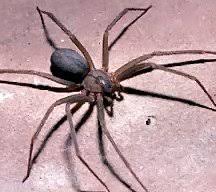
The brown recluse spider or violin spider.

Brown recluse spiders are usually between 6–20 mm, but may grow larger.
While typically light to medium brown, they range in color from cream-colored to dark brown or blackish gray.
These spiders usually have markings on the dorsal side of their cephalothorax, with a black line coming from it that looks like a violin with the neck of the violin pointing to the rear of the spider, resulting in the nicknames fiddleback spider, brown fiddler, or violin spider.
The brown recluse spider is rarely aggressive, and bites from the species are uncommon.
In 2001, more than 2,000 brown recluse spiders were removed from a heavily infested home in Kansas, yet the four residents who had lived there for years were never harmed by the spiders, despite many encounters with them.
The spider usually bites only when pressed against the skin, such as when tangled within clothes, towels, bedding, inside work gloves, etc.

Many human victims report having been bitten after putting on clothes that had not been worn recently, or had been left for many days undisturbed on the floor.


Deadly bites?


The bite frequently is not felt initially and may not be immediately painful, but it can be serious.

The brown recluse bears a potentially deadly hemotoxic venom.

Most bites are minor with no necrosis.
However, a small number of brown recluse bites do produce severe dermonecrotic lesions (i.e. necrosis); an even smaller number produce severe cutaneous (skin) or viscerocutaneous (systemic) symptoms. In one study of clinically-diagnosed brown recluse bites, skin necrosis occurred 37% of the time, while systemic illness occurred 14% of the time. In these cases, the bites produced a range of symptoms common to many members of the Loxosceles genus known as loxoscelism, which may be cutaneous and viscerocutaneous.
In very rare cases, bites can even cause hemolysis—the bursting of red blood cells.

Most brown recluse bites do not result in necrosis or systemic effects.
When both types of loxoscelism do result, systemic effects may occur before necrosis, as the venom spreads throughout the body in minutes.
Children, the elderly, and the debilitatingly ill may be more susceptible to systemic loxoscelism.
The systemic symptoms most commonly experienced include nausea, vomiting, fever, rashes, and muscle and joint pain.
Rarely, such bites can result in hemolysis, thrombocytopenia, disseminated intravascular coagulation, organ damage, and even death.


Most fatalities are in children under the age of seven or those with a weak immune system.


What is the truth?


While the majority of brown recluse spider bites do not result in any symptoms, cutaneous symptoms occur more frequently than systemic symptoms.
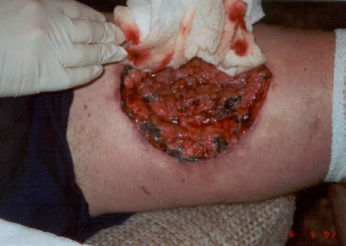
In such instances, the bite forms a necrotizing ulcer that destroys soft tissue and may take months to heal, leaving deep scars.
These bites usually become painful and itchy within 2 to 8 hours.
Pain and other local effects worsen 12 to 36 hours after the bite, and the necrosis develops over the next few days.
Over time, the wound may grow to as large as 25 cm.
The damaged tissue becomes gangrenous and eventually sloughs away.


Here we can see the progressive deterioration of a necrotic wound caused by the venomous bite of a brown recluse spider!


Brown Recluse Spider Bite

Brown Recluse Spider Bite Pictures

Brown Recluse Spider Bite Pictures

Brown Recluse Spider Bite Pictures

Brown Recluse Spider Bite Pictures


I love the nature!
But don`t panic to much.
Unlike the example in the preceding photos, the majority of brown recluse bites are "uneventful," doctors say, and rarely progress to such a serious stage.

Getting a spider bite? No thank you.


Monday, July 23, 2012

Tabi Po


It is said, that in the Philippines it is quite common for males to pee anywhere.

But there is a lingering superstition that almost everybody follows: the uttering of  'Tabi Po' before peeing.

'Tabi Po' means 'Excuse me'.

This is due to the belief that 'engkantos (elemental spirits)' live in nooks, crannies and in small earth mounds called 'punso'.
If the person forgets to say 'Tabi Po' then his genitals would swell until the spirit is satiated/driven away by a shaman.

Some say that it did occur and some males have been reported to have had swollen genitals and were relieved only by shamans, who they call 'albularyo'.
Some instances can't be even explained by science!


What is the truth?

I also enjoy to take a pee in the nature!
In Belgium we have also some kind of an "Engkantos" who will punish you when you pee in the wild.
But we call them cops!


The beauty of this legend is; who would risk it to not say 'Tabi Po'?

Would you take the chance?

Thursday, July 19, 2012

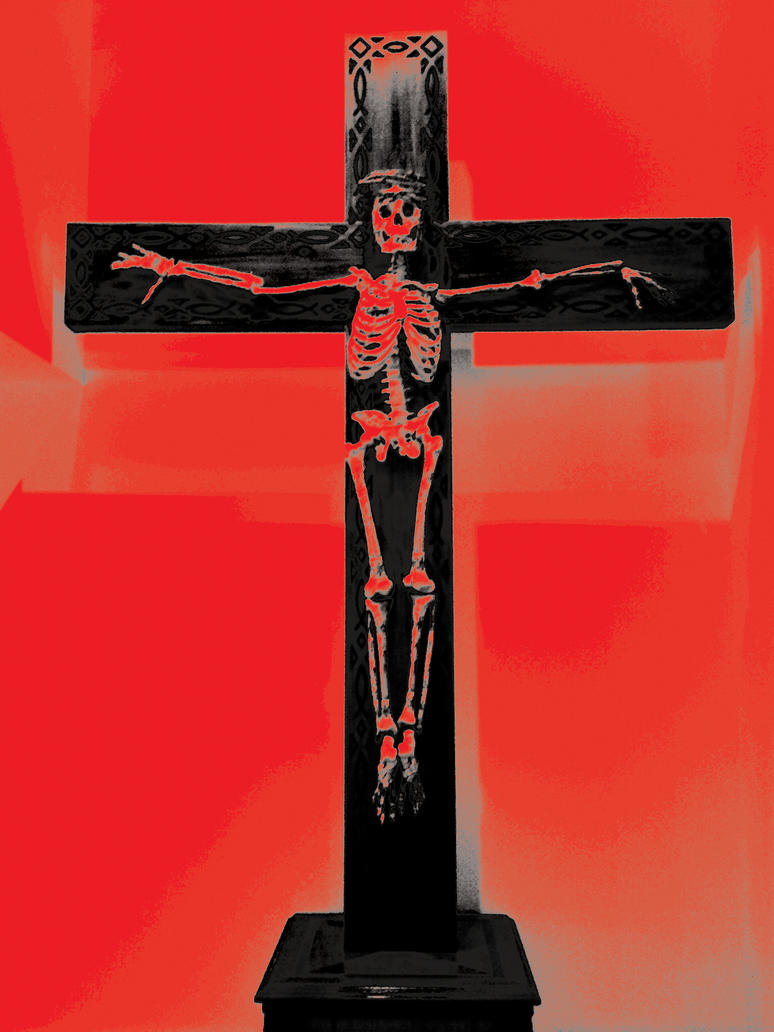
The Cross


The cross is one of the most recognizable religious symbols known to man.

Millions revere it, considering it to be the sacred instrument on which Jesus was put to death.

Roman Catholic writer and archaeologist Adolphe-Napoleon Didron stated: “The cross has received a worship similar, if not equal, to that of Christ; this sacred wood is adored almost equally with God Himself.”

Some say that the cross makes them feel closer to God when they pray.
Others use it as an amulet, thinking that it protects them from evil.
But should Christians use the cross as an object of veneration?
Did Jesus really die on a cross? What does the Bible teach on this subject?
What Does the Cross Symbolize?

Long before the Christian era, crosses were used by the ancient Babylonians as symbols in their worship of the fertility god Tammuz.
The use of the cross spread into Egypt, India, Syria, and China.
Then, centuries later, the Israelites adulterated their worship of God with acts of veneration to the false god Tammuz.

What is the truth?

The Gospel accounts of Matthew, Mark, Luke, and John use the Greek word stau·ros′ when referring to the instrument of execution on which Jesus died.
(Matthew 27:40; Mark 15:30; Luke 23:26)
The word stau·ros′ refers to an upright pole, stake, or post.

The book The Non-Christian Cross, by J. D. Parsons, explains: “There is not a single sentence in any of the numerous writings forming the New Testament, which, in the original Greek, bears even indirect evidence to the effect that the stauros used in the case of Jesus was other than an ordinary stauros; much less to the effect that it consisted, not of one piece of timber, but of two pieces nailed together in the form of a cross.”

As recorded at Acts 5:30, the apostle Peter used the word xy′lon, meaning “tree,” as a synonym for stau·ros′, denoting, not a two-beamed cross, but an ordinary piece of upright timber or tree.


It was not until about 300 years after Jesus’ death that some professed Christians promoted the idea that Jesus was put to death on a two-beamed cross. However, this view was based on tradition and a misuse of the Greek word stau·ros′.

It is noteworthy that some ancient drawings depicting Roman executions feature a single wooden pole or tree.


Conclusion

There is evidence that Jesus did not died on a cross!
However does it really matters?

But, you know what is so sick about this all?

Suppose a loved one of yours was brutally murdered and the weapon was submitted to the court as evidence.
Would you try to gain possession of the murder weapon, take photographs of it, and print many copies for distribution? Would you produce replicas of the weapon in various sizes?
Would you then fashion some of them into jewelry? Or would you have these reproductions commercially manufactured and sold to friends and relatives to be venerated?

Likely you would be repulsed at the idea!
Yet, these very things have been done with the cross!

If it was a cross or a pole it really doesn´t matter at all. It change nothing.
But that you pray with the murder weapon, the thing that tortured Jesus to death, and carry it around your neck is sick!